


Getting a custom part made is a work of art. Not in the precious sense, but in the long chain of all the small decisions between a drawing and a finished part. And because getting a part now is so easy, a new generation of engineers has come to treat much of that work as a black box. Simply upload the design files, and a part comes back days later.
Behind that interface though is a network of thousands of machine shops, each with its own equipment, process expertise, and unique capabilities. Platforms like Xometry have abstracted away one of manufacturing’s oldest problems: matching a part with the right shop that has the tools, know-how, and capacity to make it.
Reproducing a component is straightforward when the original CAD files or 2D drawings exist. Sometimes, though, the part itself is all that remains. In aerospace and defense, programs can routinely outlive their drawings, suppliers, and sometimes even the original companies that designed their components.
That leaves engineers with a harder problem: how do you reproduce a critical part when no reliable record of it remains?
To answer that question, Xometry experts Rusty Haake and Benjamin Demers explained how their team reverse-engineers a part when the drawings are gone, and what it takes to prove the replacement will work.
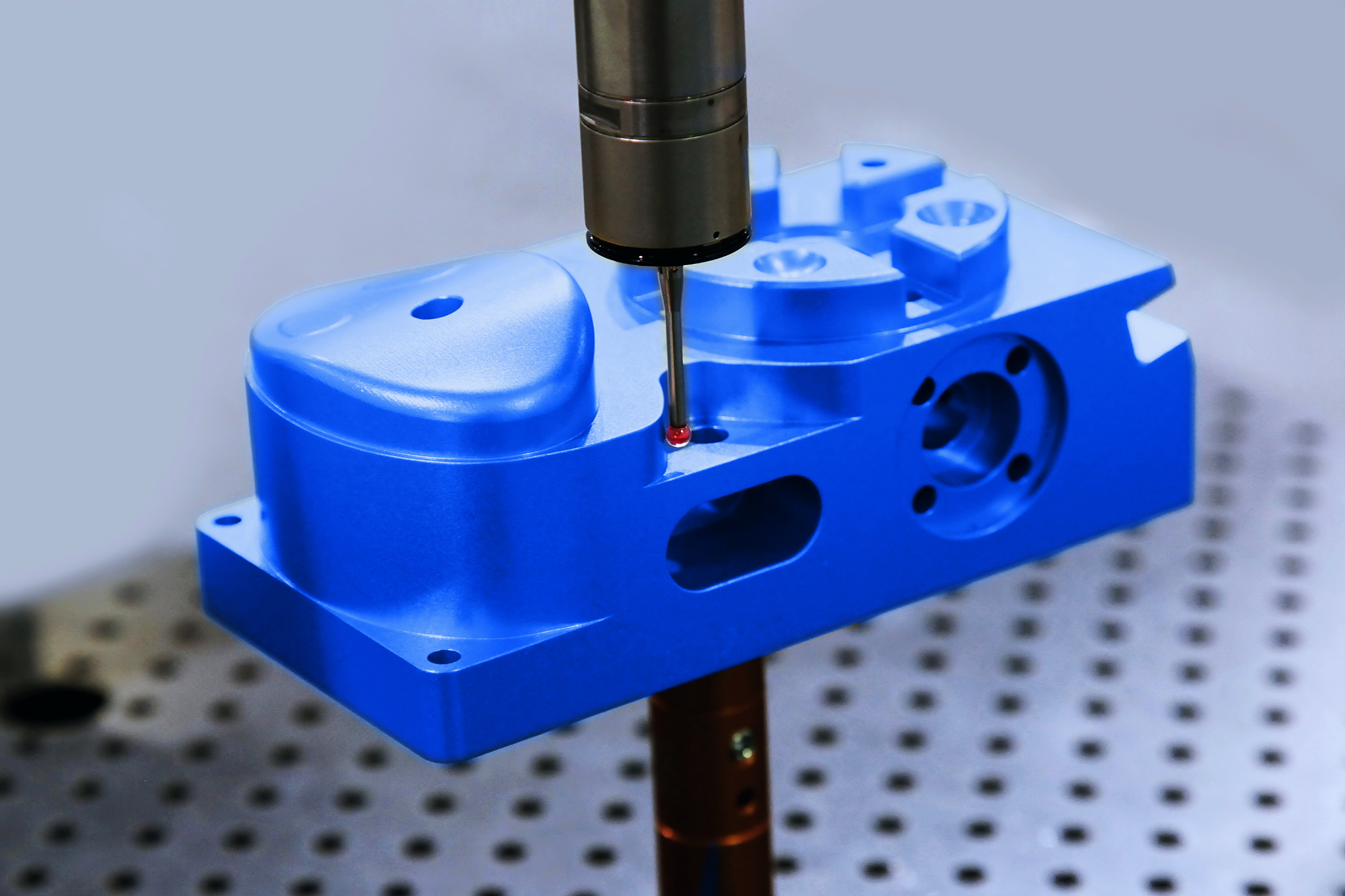
Step One: Part Intake and Examination
When a customer brings in a part they can’t reproduce, the first instinct might be to put it on a CMM or 3D scanner, but the real investigation starts more holistically by examining the history of the component.
Why can't they reproduce it? What's the story, context, and history of the part?
The discovery phase is essential and is an art form all on its own.
There are two archetypal categories of customers who cannot produce parts on their own.
The first is specialization, where the engineering and CAD package is complete, but the customer just doesn't have the right specialists in their own network. For example, Xometry's first foot in the door with a now $5M annual customer was a $30K project grinding and EDM'ing into tungsten carbide.
The engineering and design were complete and adequate, but the customer simply didn’t have anyone in their network who could do it. With thousands of partners in the network, Xometry was able to identify the right specialist.
Some projects need a specialist outside the customer’s usual supplier network. Knowing where to send that work is a large part of what Xometry has spent years building.
The second customer type is data-starved. In these cases, Xometry may have only 2D drawings with hand-scanned notes and no 3D models. The original design and fabrication may date back two or three generations, without any major upkeep.
These projects generate an iterative process. Xometry may quote a modernization package where the team models the component and redraws the CAD for customer approval. In some cases, physical samples are also required.
Data-starved projects tend to come from government and DoD entities who are tired of going to individual mom-and-pop shops with varied responses and want a sure-thing bid.
Step Two: Reverse Engineering
Once the history of the part is understood, the metrology investigation begins. The best-case scenario is to have a physical sample known to comply with the original print and use it to create a digital twin.
No single method tells the full story, so tools like 3D scanning, coordinate measuring machines (CMMs), and various gauge tools can measure the component in as many ways as possible. If the material is uncertain, the team might take mass and volume measurements to calculate its density or use X-ray diffraction to determine the metallurgy. In specific cases, sectioning the part can identify coating thickness or other properties unobservable from the surface.
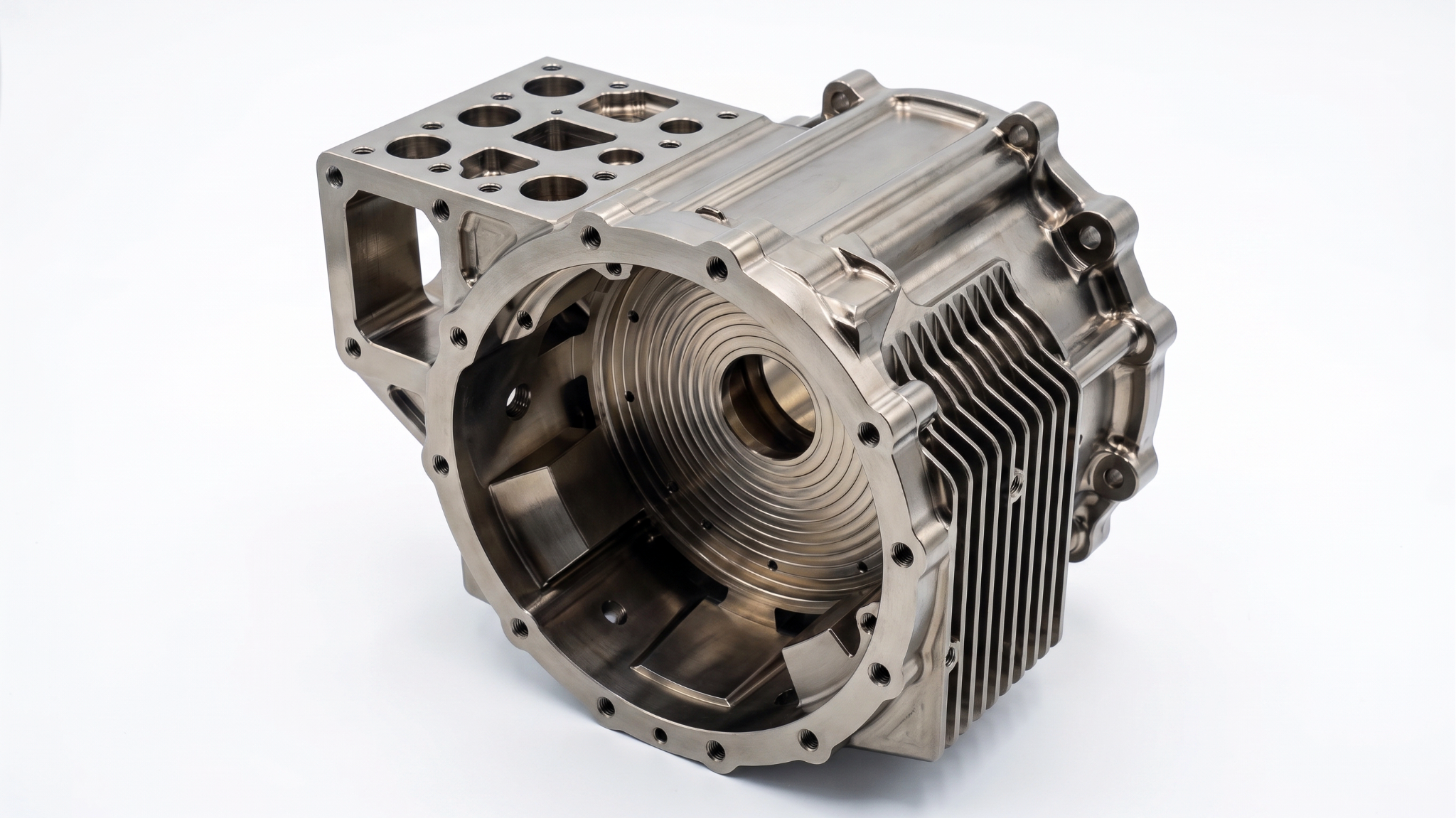
Take for example, a complicated engine housing for a tank. It’s roughly cylindrical, the size of a 60-gallon fishtank, and made of nickel-steel. It has a bunch of pockets, threaded holes, lugs, slots, and keyways that allow it to interface with all the components it touches. These features exist in a wide variety of planes, positions, and orientations.
And to make it harder, all of this complex 3D geometry needs to be represented in 2D drawings. This is a challenging part. As Haake puts it:
Consider the challenge of accurately turning a globe into a map, multiply that by 50, and you see the situation we’re in.
Now presume the part was developed in the 1970s by a team of engineers who worked closely with a machine shop. When the people who draw a part share a room with the people who make it, everything is easier. But neither of those groups is still working.
Complex 3D features can be very difficult to interpret from 2D drawings alone. The only surefire way to understand the original design intent is to examine a pristine finished product.
Photography, video recordings, 3D scans, CMM measurements, and surface-finish testers are all tools used to generate a huge library of data on the component. From that, a true 3D model can be built to create a new print.
Step Three: Qualification & Documentation
At this point, the part is ready to be manufactured. The next step is proving that it can replace the original. As is often the case in engineering, the answer depends on the circumstances.
In the best case, the original component was fully defined by its material and finishing specifications, geometry, and part notes. A quality engineer can audit the recreated part against those requirements and confirm that everything complies.
But the process isn’t always so straightforward. Sometimes a robust FEA is needed to confirm that the model generated complies with known loading requirements. If the original instructions are vague but the requirements aren’t, this is a known way to qualify a part.
Other times, both the original part and its mating components are needed. Ambiguous or poorly defined geometries will need a fit check.
Do the components fit together correctly? Can a bearing be pressed in and removed as required?
In rare instances, a function test is needed to evaluate the component. This is a heavier lift. For example, consider the requirements of a propeller: does it stay balanced while spinning and generate the correct thrust?
Or for a structural bracket, does it survive the 1,000 load cycles it’s rated to? Does the sealing section actually seal?
All of this can be scoped into the original quoting exercise and performed by Xometry and partners.
Just as important is the paper trail that proves what was done. Customers don’t—and shouldn’t—accept recreated components without an extensive documentation trail. Documentation provides a reliable foundation for any future investigation.
Why This Matters in Aerospace and Defense
This level of rigor matters because, in aerospace and defense, a missing part is rarely just a procurement problem. A grounded aircraft still incurs costs. It takes up hangar or runway space, requires maintenance, and can’t do anything useful. Even scrapping a vehicle or piece of equipment requires time, money, and effort.
This problem is becoming increasingly more urgent. More equipment is being deployed, assessed, and repaired at the same time the American manufacturing base is experiencing a wave of retirements and rising costs. Manufacturing is moving toward 3D models and automated workflows, while much of the equipment still in service was documented in old 2D drawings.
But lost drawings don't translate to a lost part. There are myriad ways to recreate the engineering outputs of previous generations while preserving the functionality that matters. The original file may be gone. The original supplier may be gone. The part doesn’t have to be.

